Neighborhood guides · Condesa and Roma
Things to Do in Condesa and Roma: Parks, Museums, Markets and Walks
October 15, 2026
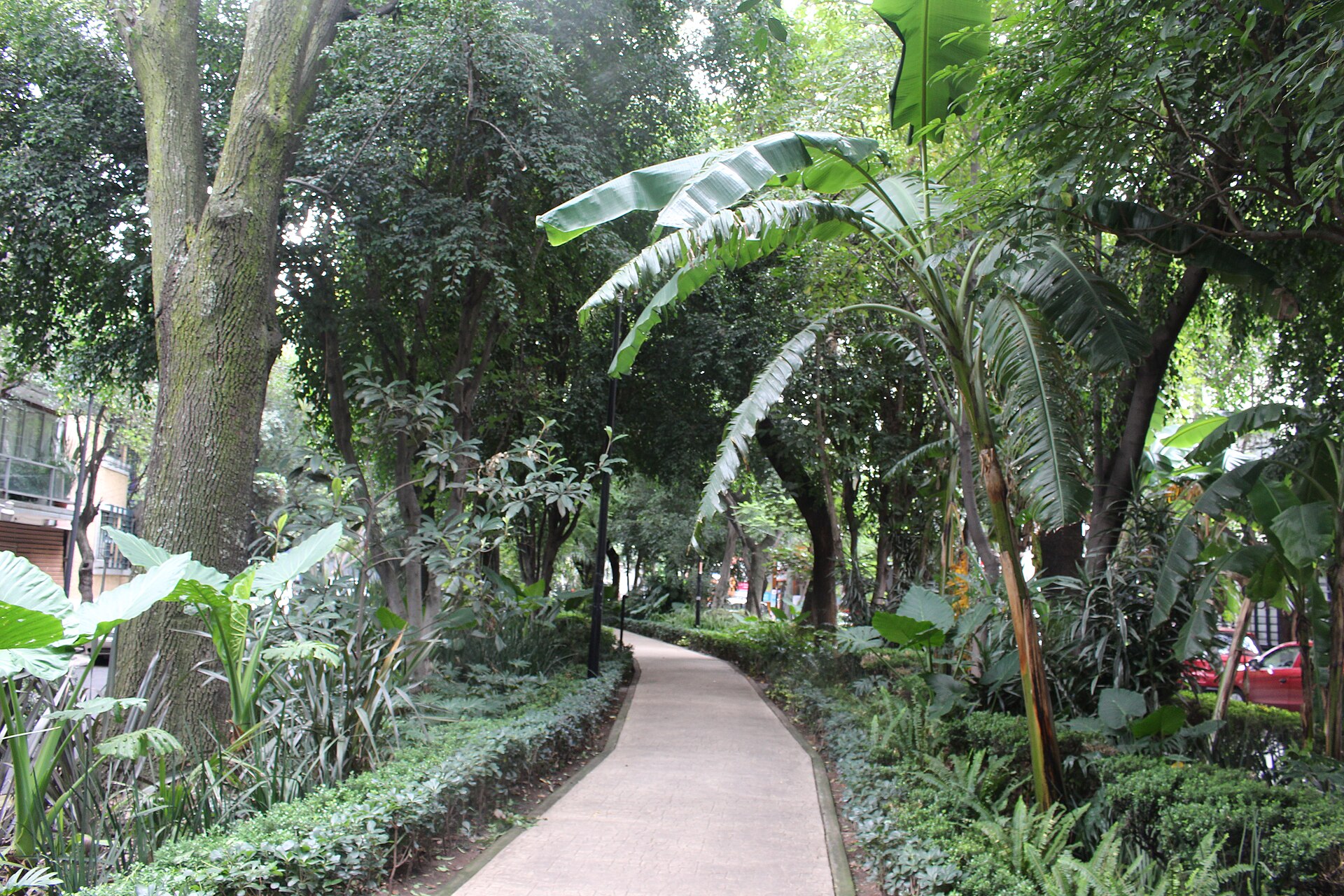
Condesa and Roma are like those houses where the best part isn’t any particular room, it’s the hallway. The good stuff happens on foot: between a park and a bookstore, between a market and a facade that makes you stop. This isn’t a checklist of must-sees. It’s what we’d do with a free weekend, and what we recommend to anyone who just moved into one of our apartments.
One tip before you start: people live here. Walking slowly, saying hello at the corner store and keeping it down at night makes the experience better for everyone.
The parks: everyone’s living room
Parque México is the heart of Condesa. Its oval shape is no accident: the neighborhood was laid out over an old horse-racing track, and Avenida Ámsterdam still follows the curve of the track. Early in the morning it fills with runners and dogs; by mid-morning, with people reading on the benches. At the Foro Lindbergh, the park’s small open-air amphitheater, there’s almost always someone dancing, rehearsing or teaching a class.
Parque España, a few blocks away, is smaller and quieter. A good spot to sit with a coffee and watch the neighborhood go by.
The Ámsterdam median deserves a full lap on foot. It’s one of the most walkable streets in the city: tree-lined, unhurried, with buildings ranging from Art Deco to contemporary.
In Roma, the plazas play the same role. Plaza Río de Janeiro has a replica of Michelangelo’s David at its center, surrounded by turn-of-the-century mansions. Plaza Villa de Madrid, on the roundabout, has a copy of Madrid’s Cibeles Fountain. And the Álvaro Obregón median is Roma Norte’s natural promenade, with benches and sculptures along several blocks.
Architecture to wander without a map
Both neighborhoods are an open-air museum of how Mexico City was built in the early 20th century. Condesa is dominated by Art Deco: clean lines, curved balconies and facades straight out of a 1930s movie. Roma leans Porfirian, the ornate style of the Porfirio Díaz era: mansions with ironwork, moldings and inner courtyards, many of them now galleries, offices or cafés.
Our advice: don’t plan the route. Walk down Ámsterdam, cross over to Álvaro Obregón and keep going through the streets of Roma Norte. The best facades are usually where you least expect them.
Museums and cultural centers
- MODO, Museo del Objeto del Objeto (Colima 145, Roma Norte). Housed in an Art Nouveau mansion, it builds temporary exhibitions from a huge collection of design objects: packaging, posters, toys, advertising. You can see it in an hour, and it will change the way you look at an ad.
- MUCA Roma (Tonalá 51, Roma Norte). Part of the cultural network of UNAM, Mexico’s national university, it hosts temporary exhibitions that bring together art, science and architecture.
- Casa Lamm (Avenida Álvaro Obregón, Roma Norte). A cultural center in a restored mansion, with temporary exhibitions, courses and a bookstore specializing in art and the humanities.
- Centro Cultural Bella Época (Tamaulipas and Benjamín Hill, Condesa). Set in a former Art Deco movie theater, it’s home to the Rosario Castellanos Bookstore of the Fondo de Cultura Económica. More than a bookstore, it’s a place to stay, read and have a coffee under its bright ceiling.
Museum hours and prices change often, so it’s worth checking before you go.
Markets: to eat and to understand the neighborhood
Mercado de Medellín, in Roma Sur, is the quintessential neighborhood market. Besides fruit, vegetables and small family-run eateries, it has stalls with products from all over Latin America: if you’re missing an ingredient from Colombia, Venezuela or Argentina, you’ll probably find it here.
Mercado Roma, in Roma Norte, is something else: a gourmet food hall with prepared-food stalls, great for a casual meal with a group.
And don’t overlook the street markets that pop up around the area. They’re the fastest way to feel like a neighbor instead of a visitor.
Sundays on Reforma
On Sundays from 8:00 a.m. to 2:00 p.m., the Muévete en Bici program closes Paseo de la Reforma and other avenues to cars. You can ride, skate or walk it, and the route usually passes through Condesa. If you don’t have a bike, the city lends them for free at stations along Reforma with an official ID. The route changes when there are big events, so check it the same weekend.
At night
Both neighborhoods have nightlife for every taste: classic cantinas, mezcal bars, cocktail bars and rooftops. Roma Norte, especially around Álvaro Obregón, is the livelier of the two; Condesa is a bit calmer, with long dinners that stretch into the night.
If you’re renting here, a practical note: the streets with the most bars are also the noisiest on weekends. That’s why, when someone asks us about an apartment, we always talk about how much nightlife you want under your window.
Ten minutes away: Chapultepec Park
From Condesa, Bosque de Chapultepec is about a ten-minute walk. That’s where you’ll find the Castle, the lake and some of the most important museums in the country, like the National Museum of Anthropology. Living in these neighborhoods means having the city’s largest park around the corner.
FAQ
Can you do it all on foot? Yes. Condesa and Roma Norte are right next to each other, and most of what we mention is within a twenty-minute walk.
Which one is better if I like going out? Roma Norte has more nightlife; Condesa is more residential and green. We go into detail in our guides to Condesa and Roma.
Is it safe to walk at night? These are busy, generally calm neighborhoods. As in any big city, keep an eye on your belongings in crowded areas and stick to streets with people around.
At Living CDMX we rent furnished apartments and houses in Condesa and Roma, with utilities and cleaning included, so you can arrive and go straight to enjoying all of this. See what’s available or message us on WhatsApp and we’ll help you find the right block.
Cover photo: Wikimedia Commons, CC BY-SA license.